Dental Implants: A Complete Guide to Replacing Missing Teeth
Missing teeth not only affect your smile, but they can make chewing difficult, change the way you speak, and impact your confidence. Over time, these gaps can even cause changes in your bite and erosion of your jawbone. Fortunately, with advances in dentistry, you don’t have to live with an incomplete smile.
Dental implants are a popular tooth replacement option because they are designed to look, feel, and function like natural teeth. Whether you’re missing one tooth or several, these artificial teeth give you back what you’ve lost.
What are Dental Implants?
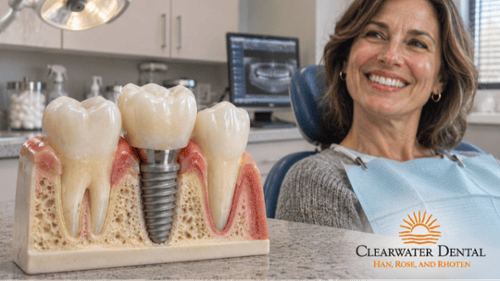
Dental implants are artificial tooth roots that are placed into the jawbone to support replacement teeth. An implant is typically made from titanium, zirconia, or another biocompatible material that allows it to integrate with the surrounding bone.
A complete dental implant restoration typically consists of three main components:
Implant Post — This screw-like component is placed into the jawbone and serves as the foundation for the replacement tooth.
Abutment — This connector attaches to the implant post and supports the replacement tooth.
Dental Crown — The crown is the visible portion of the restoration. It is custom-made to resemble a natural tooth in shape, size, and color.
Depending on how many teeth are missing, dental implants can support individual crowns, bridges, or dentures.
How Do Dental Implants Restore Missing Teeth?
Dental implants restore missing teeth by replacing the root and the visible portion of the tooth. This helps provide a stable foundation for chewing and speaking while creating a natural-looking smile.
Here is how the process typically works.
1. Initial Consultation & Evaluation
The first step is a dental examination to determine whether you’re a good candidate for dental implants. Your dentist will evaluate your oral health, review your medical and dental history, and may take X-rays and utilize 3D imaging to assess your jawbone.
It’s important to have healthy gums and sufficient bone before getting an implant. If you have experienced bone loss, you may need a bone graft or another preparatory procedure before implant placement.
2. Implant Placement
During implant surgery, a dentist or oral surgeon makes an incision in your gums, uses a specialized instrument to create a small hole in your jawbone, and places the implant post.
This procedure is often performed with local anesthesia, and additional sedation may be available depending on your needs.
3. Healing and Integration
After placement, the post needs time to heal and integrate with the bone. This process, called osseointegration, helps create a stable foundation for the replacement tooth.
Healing time will vary depending on the individual, the location of the implant, and whether additional procedures are needed. During this period, you may receive a temporary replacement tooth.
4. Attaching the Replacement Tooth
Once the implant post has integrated sufficiently with the jawbone, a dentist can attach the abutment and replacement crown.
The final restoration is designed to complement your existing teeth and help restore your bite. With proper care and regular dental visits, dental implants can last for many years.
Benefits of Dental Implants
Dental implants offer several advantages for people who want to restore missing teeth.
A Natural-Looking Smile — Implants are designed to blend in with your surrounding teeth and create a natural appearance.
Improved Chewing and Speaking — Dental implants provide a stable foundation that improves everyday comfort and function.
Support for the Jawbone — Implants transfer chewing forces to the surrounding bone and can help reduce bone loss in the area.
No Need to Alter Neighboring Teeth — Unlike a traditional tooth-supported bridge, a single dental implant typically doesn’t require reshaping adjacent healthy teeth to support the restoration.
Long-Term Durability — Dental implant posts can last for many years; however, the crown or other restoration may need to get repaired or replaced after a while.
Who Is a Good Candidate for Dental Implants?
Dental implants work well for adults who have one or more missing teeth and want a stable replacement. However, candidacy depends on your oral hygiene habits, amount of jawbone remaining, general health, and current habits that may affect healing, such as diabetes or smoking.
Restore Your Smile With Dental Implants
When you lose a tooth, you don’t have to live with an incomplete smile or struggle with chewing or speaking. Dental implants can replace missing teeth, preserve your jawbone, and support everyday oral function.
If you’re considering this restoration option, schedule a consultation at Clear Water Dental, and we will see whether you’re a candidate.