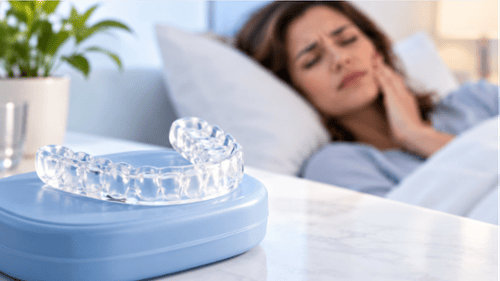
It’s normal to occasionally clench your jaw during a stressful situation. However, if you find yourself frequently clenching, grinding, or gnashing your teeth, or waking up with a sore jaw, you may be suffering from a condition known as bruxism. Left untreated, this habit can lead to worn teeth, jaw pain, headaches, and damage to dental restorations.
Fortunately, custom night guards can effectively protect your teeth and reduce many of the symptoms associated with bruxism. Here’s everything you need to know about this chronic condition, its causes, and how a professionally designed night guard can help.
What Is Bruxism?
Bruxism is a condition where someone subconsciously clenches, grinds, or gnashes their teeth. There are two primary types:
Awake Bruxism — An individual may clench their teeth during the day, often because of stress, anxiety, anger, or intense concentration.
Sleep Bruxism — An individual may grind or clench their teeth while sleeping, often without any awareness until symptoms develop.
Sleep bruxism is considered a sleep-related movement disorder and can occur several times throughout the night.
Common Causes of Bruxism
Bruxism doesn’t have a single cause. Instead, several factors may contribute to the condition.
Stress and Anxiety — Emotional stress is one of the leading causes of teeth grinding. Major life events, work pressure, or ongoing anxiety can increase muscle tension in the jaw and the chance of unconscious clenching or grinding.
Sleep Disorders — People with sleep apnea or other sleep disturbances are likely to experience sleep bruxism.
Sleep Disruptions — Snoring, sleep talking, and abnormal sleep arousals can trigger jaw movements.
Bite Misalignment — An uneven bite or poorly aligned teeth may contribute to grinding, although this isn’t always the primary cause.
Lifestyle Factors — Certain habits may increase the likelihood of bruxism, including excessive caffeine consumption, alcohol use, smoking or using tobacco products, or taking certain medications, such as antidepressants.
Signs and Symptoms of Bruxism
Many people don’t realize they grind their teeth until their dentist points out visual signs during a routine exam or a loved one wakes up to the sound at night.
However, some common symptoms that could indicate a problem include:
- Flattened or worn teeth
- Chipped or cracked teeth
- Tooth sensitivity
- Jaw pain or tightness
- Morning headaches
- Earaches
- Facial soreness
- Clicking or popping joints (TMD)
- Difficulty opening mouth
What Happens If Bruxism Goes Untreated?
Ignoring bruxism can lead to increasingly serious dental problems over time, such as:
Tooth Wear — Constant grinding slowly removes tooth enamel, increasing sensitivity and the risk of cavities.
Cracked or Broken Teeth — Excessive force can cause fractures that require fillings, crowns, root canals, or even tooth extractions.
Damaged Dental Work — Grinding can shorten the lifespan of crowns, veneers, bridges, dental implants, and fillings.
TMJ Disorders — Persistent clenching places stress on the temporomandibular joints (TMJ), potentially causing chronic jaw pain, limited movement, and joint dysfunction.
How Custom Night Guards Help
A custom night guard is a protective oral appliance made specifically to fit your teeth. Unlike over-the-counter guards, custom night guards are designed from precise impressions or digital scans taken by your dentist.
Protects Your Teeth — A night guard acts as a cushion between your upper and lower teeth, keeping them from rubbing together and preventing enamel erosion, chips, and micro-fractures.
Relieves Muscle Tension — A night guard distributes pressure more evenly, helping many patients experience less jaw soreness, reduced muscle fatigue, and fewer morning headaches.
Protects Existing Dental Restorations — If you’ve invested in crowns, veneers, implants, or bridges, a custom night guard helps safeguard those restorations from excessive pressure.
While custom night guards cost more initially, they offer a better fit, greater comfort, and improved protection, making them worth it in the long run.
Can a Night Guard Cure Bruxism?
A night guard can’t cure the underlying cause of bruxism, but it can effectively prevent tooth damage and relieve symptoms.
Depending on the cause of your bruxism, you may be able to reduce or stop this habit by better managing stress, improving sleep habits, starting sleep apnea treatment, having your bite evaluated, or starting orthodontic treatment.
When Should You See a Dentist?
You should schedule an evaluation if you experience frequent jaw pain, wake up with headaches, notice your teeth becoming worn, chipped, or more sensitive, or if your partner reports hearing grinding during the night.
The sooner you receive treatment, the less damaged your smile will become.
Don’t Let Grinding Wear Your Smile Down
Bruxism can silently damage your teeth, jaw, and dental restorations over time. Fortunately, custom night guards can comfortably and effectively protect your smile while you sleep. Because they are made specifically for your bite, they provide superior comfort, durability, and protection compared to over-the-counter alternatives.
If you suspect you're grinding or clenching your teeth, don’t wait. With early intervention, you can preserve your teeth, reduce discomfort, and enjoy healthier, more restful sleep.