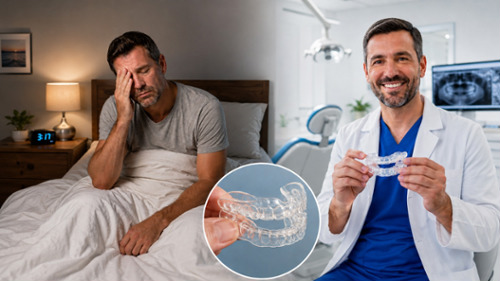
What Is Sleep Apnea and How Can Seeing a Dentist Help?
Getting a good night’s sleep is essential for your overall health, but millions of people struggle to sleep well due to a condition they may not even realize they have: sleep apnea. While you may think about going to a sleep specialist or investing in a CPAP machine after being diagnosed, your dentist can also help treat sleep apnea.
If you snore regularly, wake up feeling exhausted, or have been told you stop breathing while sleeping, it’s worth learning more about sleep apnea and how a dentist may be able to help improve both your sleep and your health.
What Is Sleep Apnea?
Sleep apnea is a sleep disorder that causes an individual to stop and start breathing during sleep. These pauses in breathing can occur dozens or even hundreds of times each night, preventing your body from reaching the deep, restorative stages of rest.
The most common type is obstructive sleep apnea (OSA). This happens when the muscles in the back of the throat relax too much during sleep. This causes surrounding tissue to press on your windpipe, partially or completely blocking your airway and temporarily reducing or stopping airflow.
Lesser common forms include central sleep apnea, which is caused by the brain failing to send proper signals to the muscles that control breathing, and complex sleep apnea syndrome, which combines features of both obstructive and central sleep apnea.
Common Symptoms of Sleep Apnea
Many people don’t realize they have sleep apnea because the breathing interruptions happen while they’re asleep. Often, a spouse, family member, or friend notices the symptoms first.
Common nighttime symptoms:
- Loud, chronic snoring
- Gasping or choking during sleep
- Pauses in breathing witnessed by another person
- Waking up frequently
- Night sweats
- Restlessness
Common daytime symptoms:
- High blood pressure that’s difficult to control
- Difficulty concentrating or memory problems
- Shortness of breath after waking up
- Dry mouth or sore throat in the morning
- Sexual dysfunction
- Irritability or mood changes
- Morning headaches
- Excessive sleepiness
If any of these symptoms sound familiar, you should seek an evaluation rather than accept poor sleep as normal.
Why You Shouldn’t Ignore Sleep Apnea
Untreated sleep apnea affects much more than just your energy levels. Over time, repeated drops in oxygen levels can place significant stress on your body.
These repeated lapses in oxygen can put you at risk of high blood pressure, heart disease, stroke, type 2 diabetes, irregular heart rhythms, depression and anxiety, and an overall reduced quality of life.
Early diagnosis and treatment can significantly reduce these risks while improving sleep quality.
What Causes Obstructive Sleep Apnea?
Several factors can increase the likelihood of developing obstructive sleep apnea. Physical factors include excess body weight, large tonsils or tongue, or a naturally narrow airway. Family history, age, smoking and alcohol use, and sleeping position can also increase your chances of sleep apnea.
In some cases, the size and position of your jaw, tongue, or other oral structures contribute to airway obstruction, making dentists uniquely qualified to recognize certain risk factors.
Oral Appliance Therapy: A Comfortable Alternative
For those with mild to moderate obstructive sleep apnea or who can’t tolerate a CPAP machine, a custom oral appliance may provide an effective solution.
This oral appliance resembles a sports mouthguard or orthodontic retainer. It is custom-made to fit comfortably over your teeth and gently positions your lower jaw forward while you sleep. This helps keep your airway open, reduce airway collapse, decrease snoring, improve airflow, and promote more restful sleep.
Because each appliance is custom-fabricated, you have a much better fit and greater comfort than over-the-counter devices.
Oral Appliances vs. CPAP
Continuous Positive Airway Pressure (CPAP) therapy remains the most popular treatment for many people with moderate to severe sleep apnea. However, not everyone can wear a CPAP consistently.
Some individuals struggle with wearing bulky masks, air leaks, skin irritation, noise, and claustrophobia. Those who travel frequently may also find it difficult to bring along CPAP equipment.
For qualified candidates, a dentist-provided oral appliance may offer greater comfort, easier portability, quieter operation, simpler maintenance, and improved treatment compliance.
Sleep Better and Protect Your Health
Sleep apnea can affect nearly every aspect of your health — not just your sleep. If you’re struggling with extreme fatigue or searching for a more comfortable alternative to CPAP therapy, schedule a consultation with our dental office. Dr. Han is a member of the American Academy of Dental Sleep Medicine (AADSM) and is on his way to becoming a diplomat, which would make him the first in the area.
He and the other members of our team can help assess your risk, coordinate with your physician if needed, and determine whether a custom oral appliance can help you achieve better sleep and better overall quality of life.